
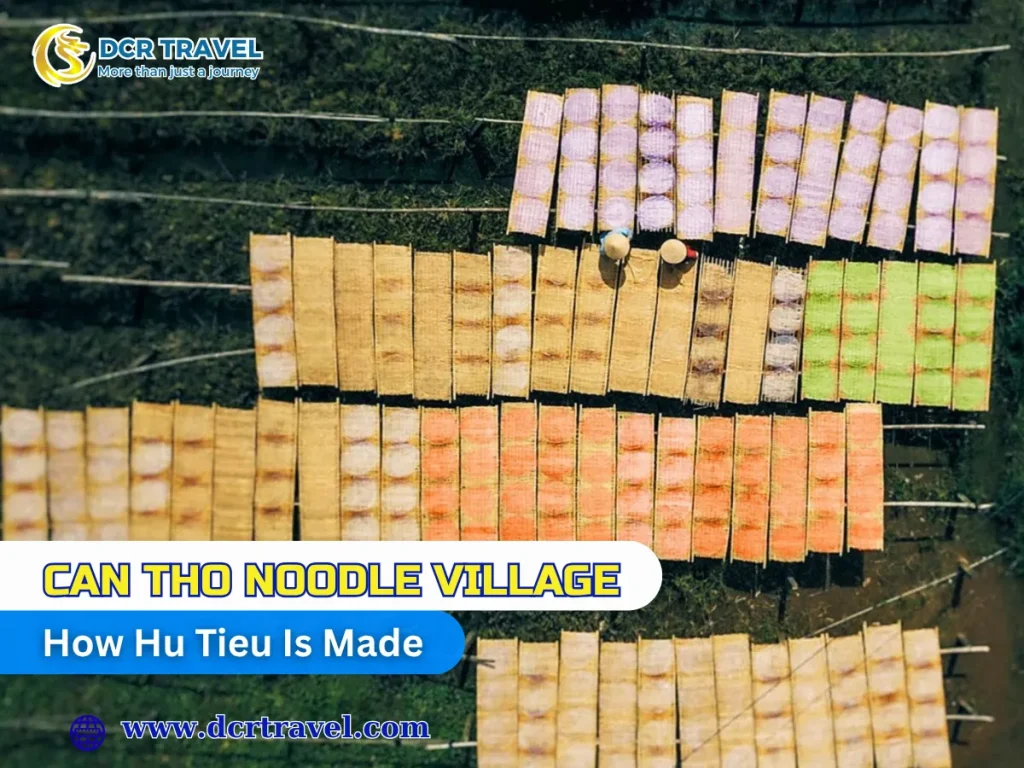
When people mention Can Tho, many visitors immediately think of Cai Rang Floating Market. They also picture lush fruit orchards and Mekong Delta specialties. However, Tay Do offers more than these familiar attractions. The city also features traditional craft villages. These places reveal local working life and culinary culture.
Among them, Can Tho Noodle Village is a destination worth discovering. In Cai Rang, many families have preserved traditional noodle making. The white, soft, and chewy noodles are more than familiar food ingredients. They also reflect local artisans’ skills and experience.
Visitors can observe the traditional noodle-making process firsthand. They can discover how local people transform familiar rice grains into a regional specialty. This is also an interesting cultural experience. It suits travelers seeking to explore beyond Can Tho’s familiar attractions.
1. Where Is Can Tho Noodle Village Located?
Can Tho’s traditional noodle-making craft is closely associated with Cai Rang. This area has several traditional noodle-producing establishments. Some factories are located along roads and canals in An Binh Ward. Their locations make them convenient stops when exploring Cai Rang Floating Market.
One well-known destination is Sau Hoai Noodle Factory. It is located in the Lo Vong Cung area, beside Rach Rau Ram Canal. Can Tho’s tourism information portal has introduced this establishment. It is a destination for visitors interested in traditional noodle-making techniques.
The craft village reflects the typical landscape of Vietnam’s Mekong Delta. Visitors can see small roads, canals, and production facilities near residential areas. Depending on the factory, they may observe rice soaking, sheet steaming, drying, or noodle cutting.
For international visitors, this is an opportunity to discover local daily life. They can also learn how familiar food products are made. These noodles eventually appear in bowls served at restaurants and eateries.
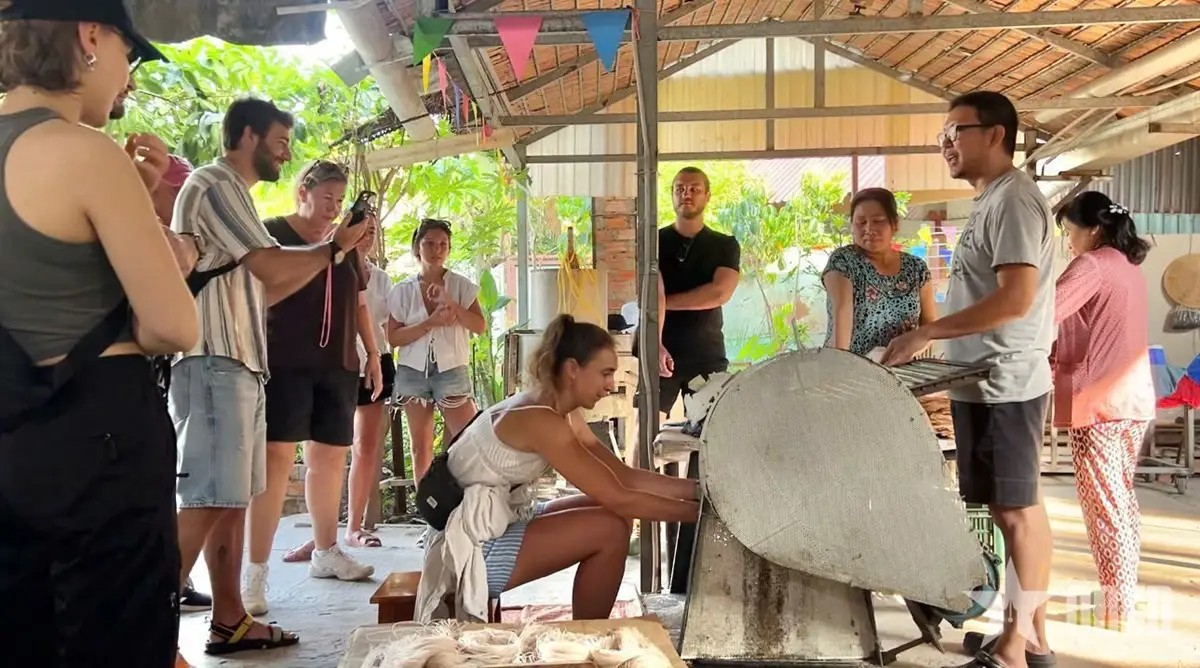
Can Tho Noodle Village
2. What Makes Traditional Noodle Making in Cai Rang Special?
Hu Tieu is a popular noodle dish in Southern Vietnam. It is particularly common throughout the Mekong Delta. The dish usually features noodles made mainly from rice. They are served with broth, meat, shrimp, vegetables, and seasonings.
In Cai Rang, noodle making is closely linked to household production and traditional workshops. Artisans use familiar ingredients from the delta. They also apply skills and experience developed over many years. These techniques help create noodles with the desired thickness, softness, and chewiness.
One notable feature is that each workshop may have its own techniques. These can involve rice selection, flour preparation, and sheet steaming. Seemingly simple steps require careful attention and practical experience.
Some establishments in Cai Rang still maintain traditional manual methods. Artisans must control the flour’s smoothness and the sheets’ thickness. They also adjust drying time to achieve suitable noodle quality.
Noodle making does more than produce food for daily consumption. It also helps preserve the distinctive culinary traditions of the local community.
3. Discover the Traditional Noodle-Making Process
One of the most interesting activities at Can Tho Noodle Village is observing production. Artisans follow several steps to transform raw rice into familiar noodles.
The process may vary depending on the noodle type and each establishment’s methods. However, the basic stages usually include:
Step 1: Selecting and Soaking the Rice
Rice is the key ingredient determining the quality of Hu Tieu sheets. Artisans select suitable rice varieties for production. They then clean the rice and soak it in water.
Soaking softens the grains and makes them easier to grind. The soaking time and preparation methods may vary. Each establishment may follow its own techniques.
Step 2: Grinding the Rice into Flour
After soaking, the rice is ground into a smooth flour mixture. This is an important step. Flour consistency affects the surface and texture of the finished sheets.
Artisans must control the water content and mixture thickness. The flour needs to reach the right consistency. If it is too thick or too thin, the sheets may not achieve the desired texture.
Step 3: Steaming the Rice Sheets
This is one of the most skill-intensive stages of traditional noodle making.
The flour is spread into a thin layer over a specialized steaming surface. The sheet is then cooked using steam. Artisans must control the amount of flour and maintain steady movements. This helps create sheets with relatively even thickness.
Once cooked, the artisan carefully removes the sheet. These thin, white sheets have a soft and smooth surface. They are then transferred to the next production stage.
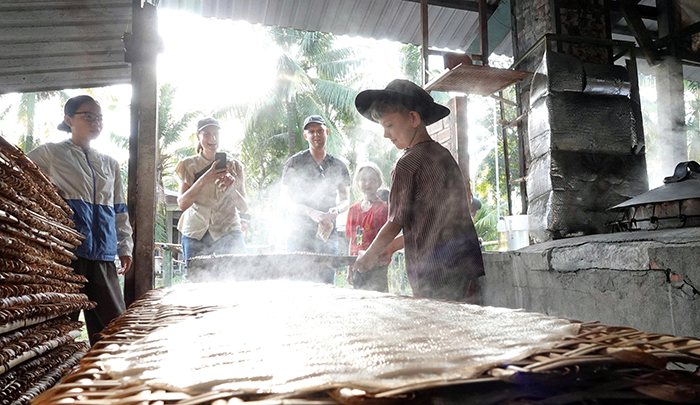
Steaming the Rice Sheets
Step 4: Drying the Rice Sheets
After steaming, the sheets are placed on racks or frames. They are left to drain and dry to the appropriate level.
At some traditional workshops, visitors can see sheets arranged on drying racks. These racks are often placed in spacious outdoor areas. Rows of rice sheets drying in the sunlight create a distinctive sight. Visitors may encounter this scene during morning visits.
Drying time depends on several factors. These include weather conditions, sheet thickness, and noodle type.
Step 5: Cutting the Sheets into Noodles
Once the sheets reach the required dryness, artisans cut them into strands. The resulting noodles have relatively uniform dimensions.
Depending on the production method, this stage uses manual tools or supporting equipment. After cutting, the noodles are sorted and packaged. They may also undergo further preservation and distribution processes.
Starting with simple rice grains, the ingredients pass through several stages. The final product becomes the familiar noodles enjoyed in Vietnamese meals.
4. What Can You Experience at a Can Tho Noodle Factory?
Visiting a noodle village is more than simply touring a food production facility. It is also an opportunity to connect with local working life and culinary culture.
Observe Artisans Making Traditional Noodles
Visitors can observe different production stages. These include ingredient preparation, sheet steaming, and noodle cutting. Every movement demonstrates the artisans’ skills and experience.
For international visitors, watching the process firsthand offers valuable insights. They can better understand the ingredients and preparation methods. It also introduces them to a signature Vietnamese dish.
Discover the Story Behind the Craft Village
Each noodle workshop may have its own story. These stories often involve the craft’s origins, development, and preservation. Visitors can learn about artisans’ experience and ingredient selection. They can also discover changes in current production activities.
This experience offers a closer look at household businesses. These families play an important role in preserving traditional crafts. Their work remains closely connected to local culture.
Taste Dishes Made with Hu Tieu Noodles
After exploring the production process, visitors can enjoy local noodle dishes. Some establishments also offer food and dining experiences.
One popular attraction is Hu Tieu Pizza. This creative dish uses rice noodles as its main ingredient. It is combined with various toppings, depending on each establishment’s preparation method.
Visitors can also discover familiar Southern Vietnamese dishes. These include Hu Tieu soup and dry Hu Tieu noodles.
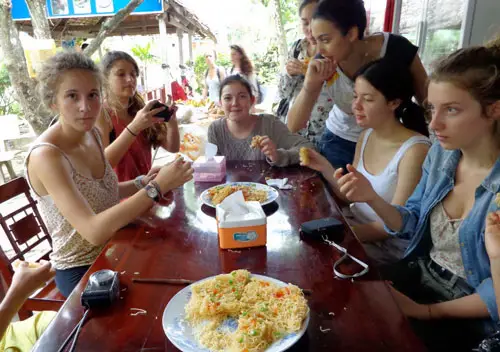
Taste Dishes Made with Hu Tieu Noodles
Buy Noodles as Souvenirs
Some establishments sell dried Hu Tieu noodles for visitors to take home. They make convenient souvenirs with a local touch. Visitors can also use them to prepare meals at home.
Before purchasing, ask the seller about the ingredients and storage instructions. You should also request cooking recommendations.
5. When Is the Best Time to Visit Can Tho Noodle Village?
Morning is generally a suitable time to visit noodle-making establishments. Visitors may have more opportunities to observe production activities. However, this depends on each workshop’s production schedule.
If combining the visit with Cai Rang Floating Market, start early. After exploring the floating market and enjoying breakfast on the river, continue to a noodle factory. There, you can discover the traditional production process.
However, not every establishment follows the same operating schedule. Some production stages may finish before visitors arrive. Activities may also change due to weather or production plans.
Therefore, contact the establishment in advance if you want to observe the process. This helps you confirm a suitable visiting time.
6. Visiting Tips for International Travelers
To make your visit more convenient, keep these tips in mind:
- Visit in the morning: Choose an early time to increase your chances of observing production activities.
- Research the destination: Confirm whether the establishment welcomes visitors and operates on your chosen day.
- Respect the working environment: Do not touch ingredients, equipment, or products without permission.
- Ask before taking photos: Request permission before photographing or filming artisans inside production areas.
- Wear comfortable clothing: Choose practical outfits for visiting workshops and walking along canals.
- Learn about cooking methods: If buying dried noodles, ask about cooking instructions, storage time, and preparation methods.
International visitors may also benefit from traveling with a tour guide. A guide who speaks their language can explain the process in greater detail. They can also share stories about the traditional craft.
7. Combine a Noodle Village Visit with Famous Attractions in Can Tho
One advantage of visiting Cai Rang Noodle Village is its convenient location. Visitors can combine this experience with river-based activities during one morning.
Here is a suggested itinerary:
- Early morning: Take a boat to explore Cai Rang Floating Market. Observe river trading activities and discover floating market culture.
- After visiting the floating market: Enjoy Hu Tieu or other traditional Mekong Delta breakfast dishes.
- Next: Visit a Can Tho noodle factory. Observe the production process and learn about this traditional craft.
- Late morning: Buy local products as souvenirs or continue exploring other attractions.
This combination introduces visitors to different aspects of Can Tho. They can discover river trading, culinary culture, and traditional craftsmanship.
8. Explore Can Tho Noodle Village with DCR Travel
If this is your first visit to Can Tho, explore local culture conveniently. Combine a visit to the noodle village with a trip to Cai Rang Floating Market.
DCR Travel offers travel experiences that introduce visitors to Mekong Delta life. Explore floating market trading activities and visit local specialty production facilities.
Instead of simply enjoying a bowl of Hu Tieu, discover its origins. Learn how rice grains become familiar noodles. Observe the artisans’ skills and appreciate traditional craftsmanship. Experience the cultural value of this profession in Can Tho.
Contact DCR Travel for advice on exploring Can Tho and discovering the distinctive culture of Vietnam’s Mekong Delta.
DCR TRAVEL
Hotline: 02923.96.96.98 Tel: 0702.811.812
Address: R29, Street No. 8, Company 8 Residential Area, Cai Rang Ward, Can Tho City.
Website: dcrtravel.com
Frequently Asked Questions About Can Tho Noodle Village
1. Where Is Can Tho Noodle Village Located?
The traditional noodle-making area is associated with Cai Rang, Can Tho City. Some traditional workshops are located in An Binh Ward and along Lo Vong Cung Road.
2. Can Visitors Tour Noodle Factories in Can Tho?
Yes. Some noodle factories welcome visitors and introduce their traditional production processes. They may also offer hands-on activities. Contact the establishment beforehand to confirm its visiting schedule.
3. What Are the Main Steps in Traditional Noodle Making?
The basic process includes selecting and soaking rice, then grinding it into flour. Next, artisans steam the rice sheets, dry them, and cut them into noodles. Specific methods may vary depending on the noodle type and each establishment.
4. Can Visitors Try Making Noodles Themselves?
Some establishments may offer hands-on noodle-making activities. However, experiences vary between locations. Ask about available programs and participation requirements before visiting.
5. Can Visitors Combine a Noodle Village Tour with Cai Rang Floating Market?
Yes. These two experiences are often combined during morning tours of Can Tho. Visitors can explore the floating market first. They can then visit a noodle factory to discover this traditional craft.
9. Conclusion
Can Tho Noodle Village is an interesting destination for culinary culture enthusiasts. It also offers insights into traditional craftsmanship in Vietnam’s Mekong Delta. Every production stage requires care and experience. These include rice selection, flour grinding, steaming, and noodle cutting.
When visiting Can Tho, do more than simply enjoy a bowl of Hu Tieu. Take time to visit a traditional noodle factory. Observe the production process firsthand and listen to artisans’ stories. Discover the cultural beauty of this local craft.


